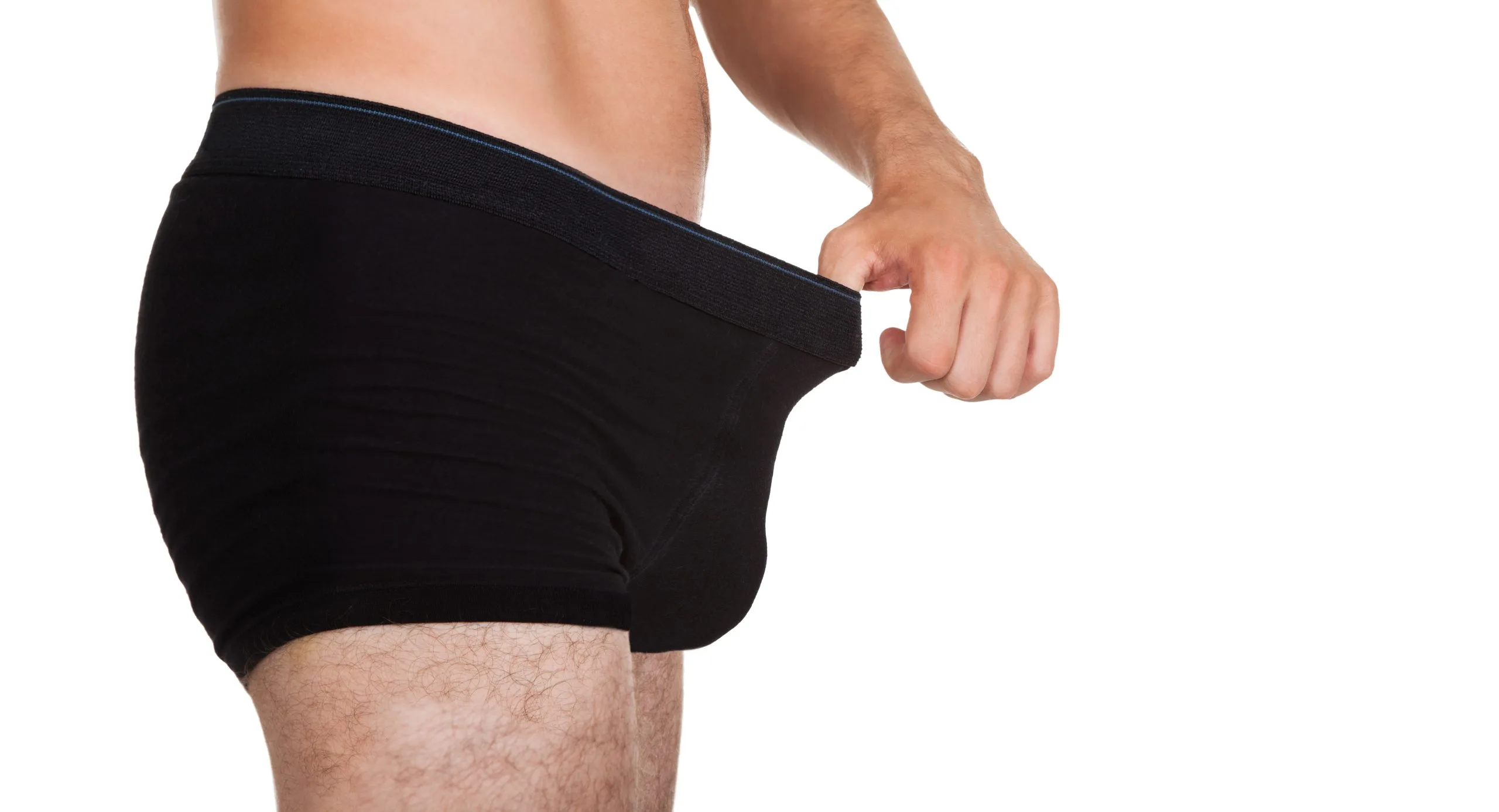
If you have noticed a significant curve or bend in the penis, hard lumps or plaques under the skin, pain during erections, or a shortening or narrowing of the penis, these may be signs you have Peyronie’s disease — a condition caused by fibrous scar tissue forming inside the penis. These symptoms can develop suddenly or gradually and often impact both sexual function and emotional well-being.
Peyronie’s disease is a condition where firm, fibrous scar tissue — called plaque — builds up just beneath the skin of the penis. This plaque is not the same as the plaque that forms in arteries; it is a hard, flat, non-cancerous lump or band of tough tissue.
The penis contains two sponge-like chambers called the corpora cavernosa, which fill with blood to create an erection. The surrounding tissue, the tunica albuginea, is designed to stretch evenly. When Peyronie’s plaque forms on this layer, it creates an inelastic area that pulls on the surrounding tissue during an erection, causing the penis to bend or curve.
The exact cause is not always clear, but it is often linked to repeated minor injury or bending — during sex, sports, or an accident — though it can also develop without obvious trauma. There may be a genetic component, as it sometimes runs in families. It most commonly affects men between the ages of 30 and 65 (often 40–60).
The condition usually develops in two stages:
Acute phase — the plaque is forming, and symptoms like pain and curving may change or worsen
Chronic phase — the plaque has settled and symptoms become more stable
Recognizing the warning signs early can make a meaningful difference. Symptoms range from mild to severe and may appear gradually or quite suddenly. Here are the five most common indicators of Signs You May Have Peyronie’s Disease.
This is the hallmark sign of Peyronie’s disease, most apparent during an erection. The curve can be upward, downward, or to either side, depending on where the scar tissue formed. While a slight natural curve is normal for many men, the bend associated with Peyronie’s is often more pronounced and may make intercourse difficult or even impossible.
You may also feel a hard lump or band of tissue under the skin — the plaque itself — often one of the first physical clues. A new or worsening curve that develops over weeks or months is a primary red flag and can affect both physical function and confidence.
Pain with erections is a frequent symptom, especially during the acute phase when inflammation and plaque formation are actively occurring. It can range from a mild ache to sharp, intense discomfort, and may also occur during sex or when the penis is soft.
For many men, the pain subsides as the condition stabilizes into its chronic phase, typically within 6 to 18 months. However, even after the pain fades, the physical deformity — the curve, lump, or shortening — usually remains.
Peyronie’s disease and erectile dysfunction (ED) often go hand in hand, both physically and psychologically:
Physically, the scar tissue can disrupt blood flow and damage the elastic tissues that trap blood, making it harder to get or keep a firm erection — especially below the area where the plaque has formed.
Psychologically, pain, performance anxiety, and distress over the changing appearance can all create a mental barrier to arousal.
If you are struggling with this symptom, effective ED Treatment options are available to restore function and confidence.
Because the scar tissue doesn’t stretch with the rest of the penis, it can tether one side and cause visible shortening. If the plaque forms a band around the shaft, it can create an “hourglass” or “bottleneck” deformity, where the penis appears cinched or narrowed in one spot.
Shortening or narrowing combined with a curve points strongly toward Peyronie’s disease rather than another condition. Restoring a natural, proportional contour is a key goal of the corrective treatments we offer.
The physical symptoms are only part of the story. The condition can take a significant emotional toll, and studies show a large share of men with Peyronie’s disease experience some level of depression or anxiety. Many feel embarrassed or worried about satisfying a partner, leading some to avoid intimacy altogether.
This can place a heavy strain on relationships, and partners may feel confused or concerned. Open communication helps — but so does a professional, judgment-free environment where you feel heard and supported, allowing you to work toward solutions that improve your overall quality of life.
If you recognize several of the symptoms above, there is a reasonable chance you may be dealing with Peyronie’s disease. The most definitive physical sign is a palpable hard lump or band of scar tissue under the skin, which you can often feel yourself when the penis is flaccid.
The key difference is change over time — Peyronie’s usually involves a curve or symptom that appears or worsens, rather than a natural curve you were born with. Other conditions can cause similar symptoms, which is why a professional evaluation matters.
Consider these questions:
Have you noticed a new or worsening curve in your erect penis?
Do you feel a hard spot or lump that wasn’t there before?
Have erections become painful when they weren’t previously?
Does your penis seem shorter or have an indented “hourglass” shape?
Has intimacy become harder or more stressful?
Answering “yes” to several of these strongly suggests a medical evaluation is warranted. While early diagnosis provides the widest range of options.
You do not need to wait until symptoms are severe. Getting evaluated early — especially during the acute phase when plaque is still forming — can help manage pain and slow the progression of the curve.
Consider reaching out to a provider if you notice any of the following:
A new or worsening curve in the penis
A lump or hard band of tissue under the skin
Pain during erections or sex that does not go away
Trouble getting or keeping an erection
Shortening, narrowing, or other shape changes
Anxiety or relationship strain related to these changes
Choosing a provider with deep experience in male-focused procedures is crucial. Dr. David Dellinger is a double board-certified surgeon whose background in complex plastic and reconstructive surgery provides the anatomical command required for these delicate cases. At our Austin practice, the focus is on making men feel heard and supported. If your symptoms are worsening quickly or pain is interfering with daily life, do not wait.
The first step is always a confidential consultation and physical examination. Your provider will review your symptoms and medical history, feel for the location and size of the plaque, and determine which phase of the disease you are in. This is often all that is needed to make a diagnosis.
Treatment depends on the severity of your symptoms and your personal goals. While there is no one-size-fits-all cure, a personalized plan can help reduce curvature, restore function, and improve quality of life:
Penis Fillers Revision — address curvature and contour irregularities using advanced reconstructive principles to restore a natural, masculine shape
ED Treatment — restore erectile function and improve quality of life
Enhancement Services — a broader range of options focused on appearance, confidence, and proportion
Dr. Dellinger draws on his reconstructive background to deliver natural-looking, proportional, and safe results in a discreet, professional setting.
You can schedule a free, discreet consultation. There is no consultation fee — the goal is simply to give you clear answers in a comfortable space. Package pricing is also available for men who choose to combine multiple procedures.
Signs You May Have Peyronie’s Disease include a new curve or bend, a palpable lump under the skin, pain during erections, trouble keeping an erection, and shortening or narrowing of the penis — often accompanied by emotional stress and relationship strain. Recognizing these signs is the beginning, not the end. Early, expert attention can make a real difference, and discreet, personalized care is available at Texas Penis Enlargement in Austin, where Dr. David Dellinger helps men restore comfort, function, and confidence.

About the Author
Dr. David Dellinger
Get Your
Confidence back.
June 30, 2026
Your journey to a more confident you is just a consultation away. Contact us today to schedule your free, private, and confidential meeting with Dr. Dellinger. We look forward to helping you achieve your aesthetic goals in a supportive and professional environment.
